



JUMP+ manga Dandadan became widely popular worldwide after its anime adaptation. Its style, which blends sci-fi and fantasy elements, quickly gained traction in the Western anime community. While netizens were enthusiastically discussing the anime’s plot, online illustrator @Lynn6Thorex posted “fixed art” on X, reimagining the male protagonist Takakura Ken (Okarun / the Occult Otaku) as a Black person. This sparked significant dissatisfaction among many Japanese netizens.
Meanwhile, A.J. Beckles, the English voice actor for the male lead in the US. version of Dandadan, publicly supported the “fixed art” after learning about it, further escalating the controversy.
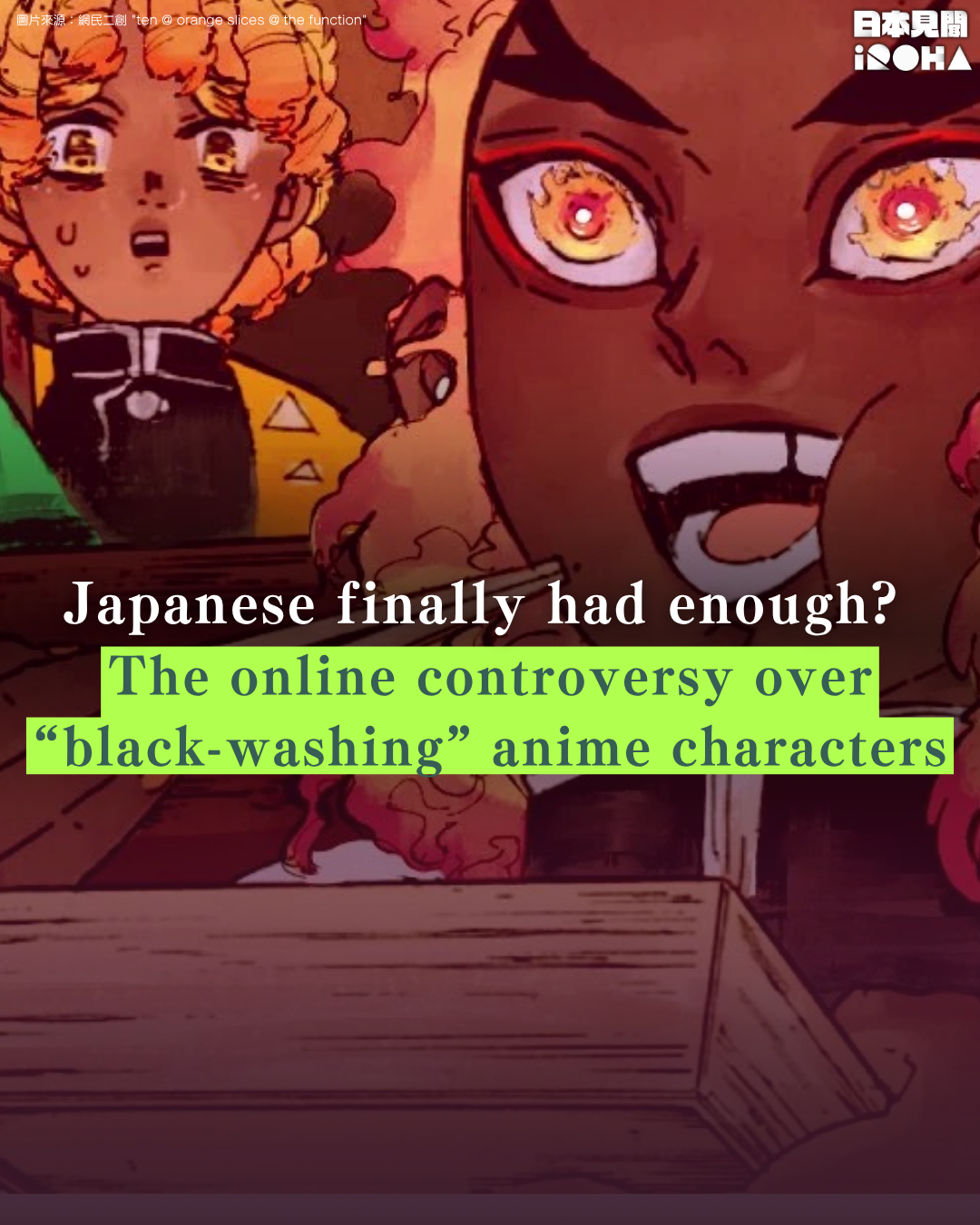
Japanese Netizens Finally “Fight Back”
After the incident, Japanese netizens broke from their usual silence. They left comments on social media criticizing Beckles and Lynn for showing complete disrespect toward the original work, and some even launched a petition calling for the voice actor to be replaced. After facing criticism, Beckles reacted in a manner typical of left-leaning intellectuals and KOLs in Hong Kong and Taiwan—portraying himself as the victim, claiming he was already used to (discrimination)—before resentfully deleting his posts and account to dodge the backlash. Supporters of the two in Western progressive circles argued that such “blackening” images are simply “fan art” and that the Japanese reaction was unreasonable. However, if we look further back in time and examine the deeper historical context, it becomes clear that Japanese anger did not arise overnight.
“Fixed Art” in the Western Fan-Creation Circle
In recent years, Japanese anime has become increasingly well-known among Western netizens through streaming platforms, forming a global pop-culture wave. This wave coincided with social justice movements such as “BLM.” Many foreign creators began incorporating related political demands into their work. One example is the trend of “blackwashing anime characters,” which started around 2022.
This creative trend is driven by the ideology of “correcting works that lacking Black characters and are racially discriminatory.” Its main complaint is that Japanese anime has too few Black characters, and it criticizes Japanese creators for supposedly never having seen Black people. This is commonly referred to as “fixed art.” It is known that characters from Naruto, One Piece, and even Anya from Spy × Family have been “blackened” by Western creators through secondary creations.
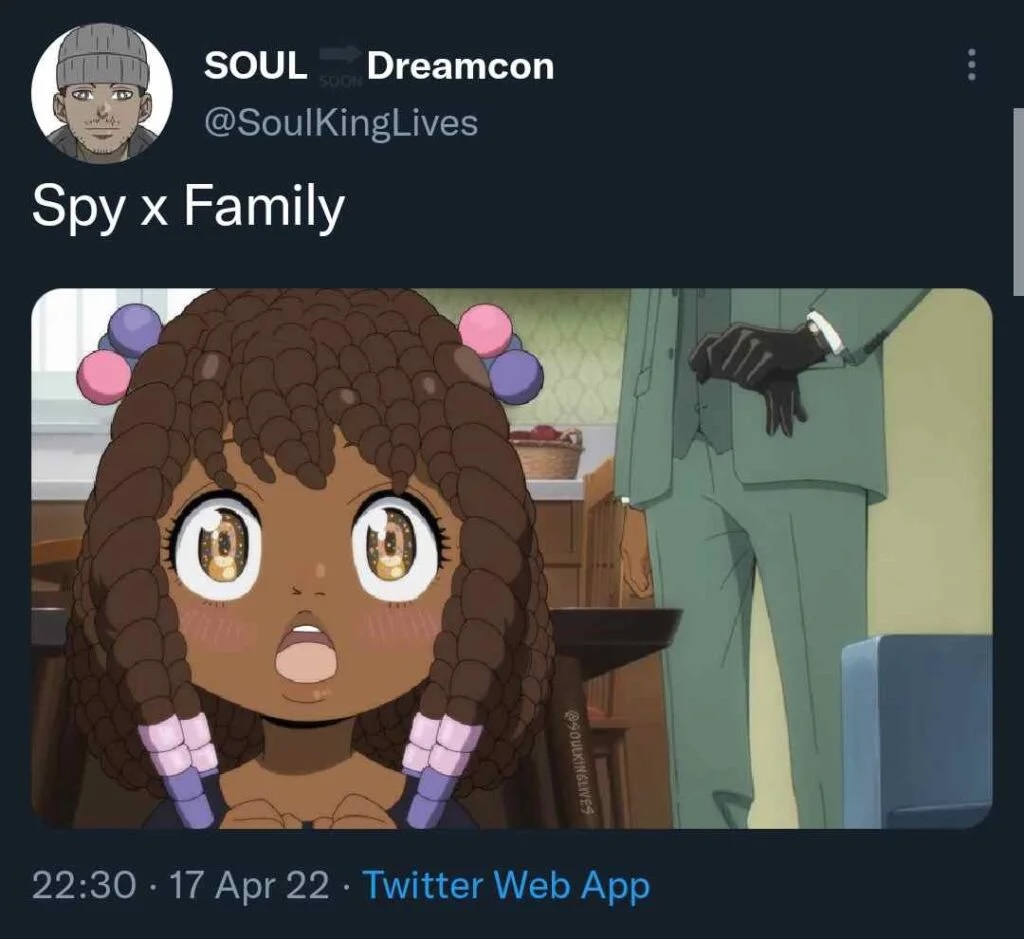
Western netizens often claim that Japanese anime designs characters with a “quasi-White” appearance, implying that the Japanese worship White features and lack “national self-esteem.” Some more radical views even argue that Asians should be represented exclusively with epicanthic folds (the author notes: isn’t this just reverting to stereotypes?). Therefore, “blackening” creations have never been the purely innocent “fan art” that Western progressive circles claim. Judging from various phenomena and expressions, they appear more like political statements—or even political critiques—aimed at correcting the other side’s alleged “racism” or “patriarchy.”
What Actual People of the Color Think
In 2022, Japanese X user @Kurobe613 drew fan art of the Disney animated film Encanto. Shortly afterward, the artist was reported and criticized by American netizens for “whitewashing” the characters. To avoid further trouble, the artist deleted the account and took the images down. Unexpectedly, this move drew strong dissatisfaction from many Latin American netizens.
Numerous local netizens supported the Japanese artist, arguing that the coloring did not disrespect skin tones. They pointed out on social media that Latin American skin tones are not limited to brown—they range from light to dark, including white, black, and red. Calling the art “not Black enough,” they said, not only revealed selfishness but also exposed the “arrogant ignorance of White Westerners.” They promptly launched a secondary-creation campaign called “Shut up Gringo” online (a derogatory term in Spanish and Portuguese for English speakers, similar to the Cantonese “gwailou”), criticizing Western netizens for overstepping.
Rise Up, Those Who are Falsely Represented
Meanwhile, entering the 2020s, the American cultural industry has increasingly prioritized “DEI” (Diversity, Equity, and Inclusion), elevating it to a primary investment goal. The film and gaming industries were the first to feel the impact. Under the globalized internet, progressive online activists (also known as SJWs) who champion DEI naturally view the anime and gaming industries as targets for “correction.”
One of the most high-profile controversies in recent years has been the uproar over Assassin’s Creed Shadows. The Assassin’s Creed series has always sold itself on solid historical research combined with semi-fictional stories. Ubisoft moved the setting to Japan this time, and players were originally looking forward to how foreigners would present a Japanese story. Unexpectedly, after the game was announced, the series protagonist turned out not to be Japanese, but a historical Black figure named Yasuke, portrayed as a “Black samurai” rather than a ninja, which would have been closer to the assassin theme.
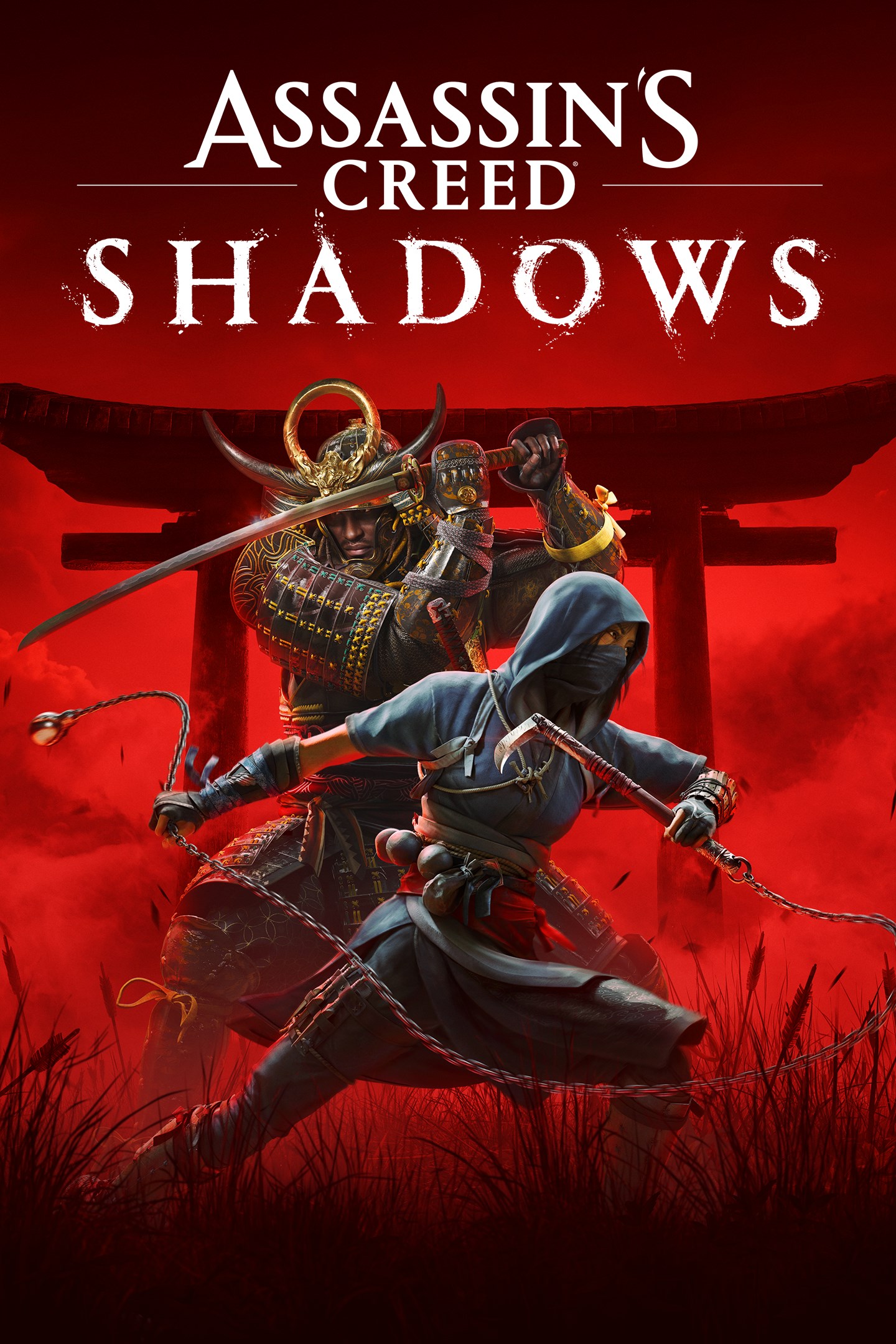
Assassin’s Creed Shadows, 2025 by Ubisoft
Japanese players were shocked. They dug up statements from Ubisoft developers and discovered that Ubisoft never intended to recreate or create a fictional Japanese historical story. They simply wanted to make a “Black samurai” that suited Western players’ tastes (as they claimed). It was further revealed that the research on Yasuke was based on a novel by a non-historian White scholar, that the research was groundless, and that Yasuke had been fabricated into a “Black samurai” in violation of actual history.
After the revelations, there was widespread dissatisfaction across Japan, even attracting attention from member of the National Diet. Some Japanese netizens speculated that the story outline of Assassin’s Creed Shadows seemed intended to promote the ideology that “Japan assisted in the Black slave trade,” rather than focusing on making a good game—leaving Japanese players feeling that their identity had been exploited and ignored.
In the same period, Pop Team Epic creator Ōkawa Bukubu (bkub) shared artwork of their Splatoon 2 character Iida = Marine on X. The art was criticized by Western netizens for being “too White, not Black enough,” disrespecting the character’s Black design, and the artist was forced to take the work down. This series of incidents inevitably made Japanese netizens even more sensitive. When they saw a Dandadan character being “blackened” once again, it was the last straw—they said no to “fixed art.”
Fortunately, this Dandadan controversy also received support and solidarity from many anime fans in the United States and Latin America, so the narrative did not completely tip toward criticizing Japan.
Seeing Only “Colonialism”—Everything Is “White Worship”
American netizens or intellectuals often question Japanese anime as a form of White worship. On Quora, Japanese people frequently explain this misunderstanding in detail:
First, the pioneer of Japanese anime, Osamu Tezuka, adopted a drawing style modeled after Disney cartoons, placing special emphasis on expressive eyes. Successors who inherited this style naturally continued using large, lively eyes.
Next is the issue of East Asian skin tones: Japanese netizens explain that under Japan’s geographic latitude, natural skin tones are mostly yellowish-white or pale—not “whitewashing.” Anime characters from southern Japan are relatively few in number and serve mainly as character attributes that highlight the uniqueness of southern residents; this has nothing to do with any hierarchy of “race” or “skin color.”
As for the colorful hair colors, they are related to character personality diversity and easy identification. After all, anime is a visual medium; production staff need to convey a character’s personality through appearance. Besides different hairstyles, hair color is a common method. Therefore, “blond hair and blue eyes” are more often used to display a character’s personality than to express “worship.” As a counterexample: progressive people today often dye their hair green, purple, or pink and engage in many “radical” behaviors, yet anime characters with pink, purple, or green hair do not exhibit corresponding “SJW behavior.” This clearly shows that character hair color has never been used to “represent reality.”

Just as Black Americans who regard Dragon Ball as a “bible” clearly understand that a Super Saiyan transformation is a manifestation of rage energy. If you told them to their faces that “Saiyan transformation equals racial worship of blond White people,” you would probably be mercilessly mocked and booed. Using progressive values as a critical framework to attack the content and ideas of Japanese anime is clearly a case of “putting the wrong hat on the wrong person.” The problem with these progressive online activists is that they constantly assume only their own actions constitute the fight for equal rights, while any other form of integration is mere illusion—precisely another form of “White-style superiority.”
What Happened Later with the “Yasuke Incident”?
Assassin’s Creed Shadows, which went through the Yasuke controversy, recently announced a release date of March 20. Sharp-eyed Japanese netizens noticed that in the Japanese version of the game description, Yasuke is no longer referred to as a “samurai” but as a soldier. However, descriptions in other language versions still call Yasuke a “legendary samurai.” The new poster also downplays Yasuke’s importance (reducing his figure size). This shows that Ubisoft has made some “concessions” to the Japanese. Whether there is genuine sincerity in the improvements remains a matter of opinion.
Judging from current online reactions, while DEI itself advocates “diversity, equity, and inclusion,” its emergence has ironically united all netizens who feel their gaming experience and player feelings have been exploited, causing them to say no to “equity.” Looking ahead, the Japanese appear increasingly inclined to actively reject “progressivism.”
Text / Thuja