



Game producer Tomonobu Itagaki passed away on 2025 October 16 at the age of 58. In the restless, invention-driven 1990s and early 2000s, this man — mockingly dubbed the “Rotten-Face Guy” or “Sulfuric-Acid Face” by the industry — was a guaranteed magazine-cover presence the moment a new project of his was announced.
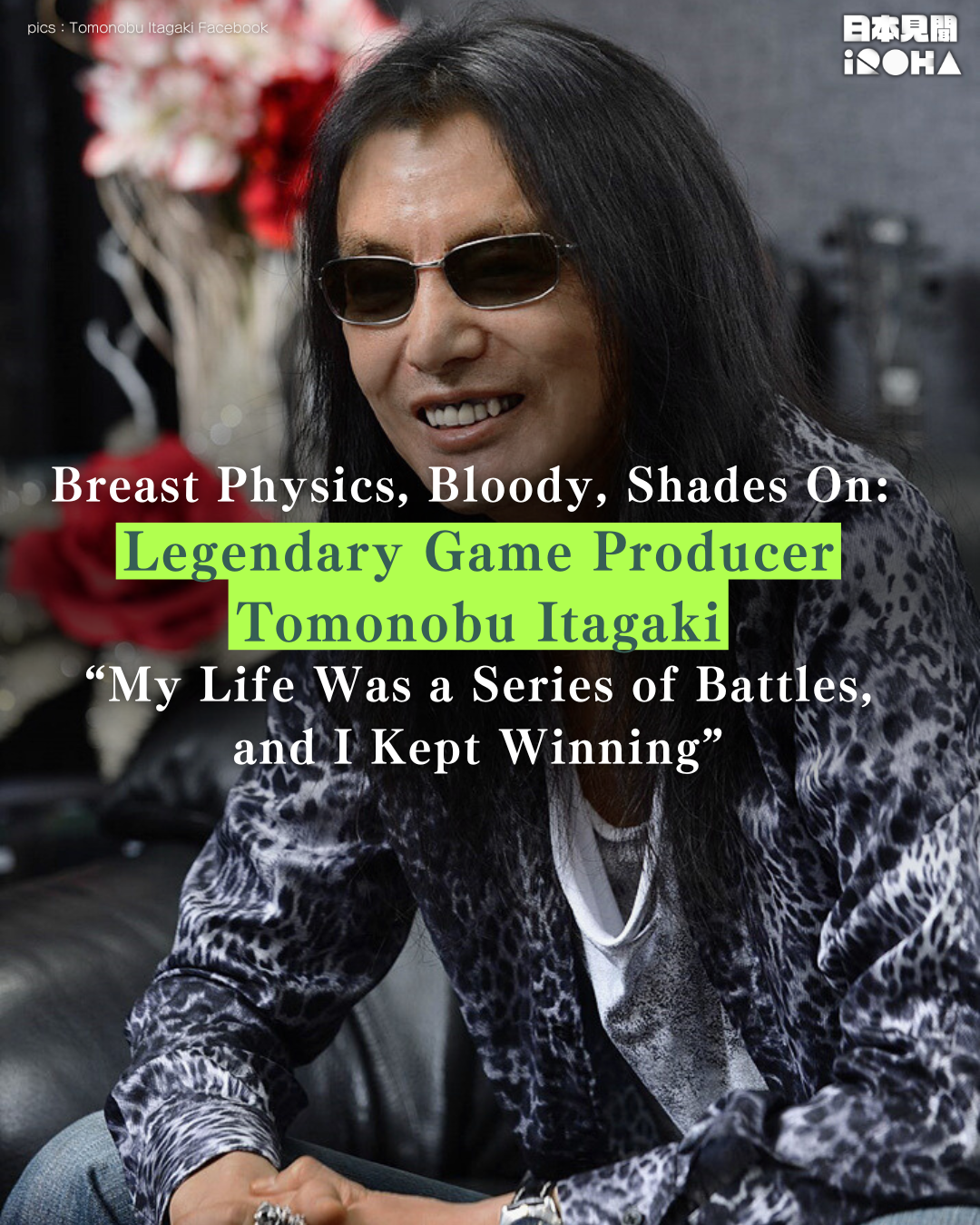
His games are now considered classics, but what many remember even more vividly is his perennial Wong Kar-wai–style black shades (he claimed they stopped people from reading his eyes at the casino) and a string of blistering one-liners.
He despised Tekken, once declaring that “the five games I hate most are Tekken 1, 2, 3, 4 and 5.” (Years later Tekken series producer Katsuhiro Harada clarified the context; more on that below.) He needled Devil May Cry creator Hideki Kamiya’s new work for showing “no progress — has Kamiya been asleep these past eight years?”
He dismissed the Dynasty Warriors series as “basically the job of standing in a cabbage field with a giant sword or scythe and harvesting a few thousand heads of cabbage.” And he told players flat-out that “anyone who thinks Ninja Gaiden is too hard is a loser.”
Creators in the ’90s simply dared to speak. Itagaki didn’t just talk; he delivered. If everyone else is doing it, he won’t.
THE Breast Physics
Three titles define his career: Ninja Gaiden, Dead or Alive, and DOA Beach Volleyball.
The first stunned players of its day with raw speed and gore. The second gave fighting-game fans a third major addiction alongside Tekken and Virtua Fighter, letting Tecmo stand shoulder-to-shoulder with the then-dominant Sega and Namco.
DOA Beach Volleyball successfully transplanted the fighters onto a new battlefield, wrapping pure spectacle in a sports package and, with the best 3-D engines of the time, elevating the “breast physics”(jiggle physics) that have since become almost obligatory in games (alongside Super Robot Wars Series, of course). Yet the work that left the deepest mark on me remains the mercilessly difficult Ninja Gaiden.

《Dead or Alive Xtreme Beach Volleyball》(Tecmo,2003)
“High Difficulty” Back In The Days
Today’s players reach first for “Souls-like” when they think of high difficulty. In the years when I went from home-console player to games journalist, Ninja Gaiden (and its NES predecessor Ninja Ryukenden) was already the gold standard of hardcore.
Itagaki’s 3-D reboot kept that reputation. He chose Xbox not only because Microsoft offered the development engine free of charge, but because the hardware could finally realize the high-speed movement and fluid swordplay he envisioned for a ninja.
Part of the reason so many players — myself included — fell hard for Ninja Gaiden was childhood longing for the ninja (in my case largely fueled by the old anime Ninja Hattori-kun).
More decisive still were the two elements Itagaki poured into the 3-D version: torrents of blood and blistering mobility. In an era when most developers still flinched from gore, Ninja Gaiden was at least an early pioneer (though Doom remains the true origin).
And no matter how polished Capcom made action games like Onimusha, they never quite captured that pure “speed is the only invincibility” ninja feeling. The sheer joy of carving through enemies at high velocity required both console power and developer nerve. That is why the mere mention of Team Ninja and Tomonobu Itagaki once made players’ pulses race.
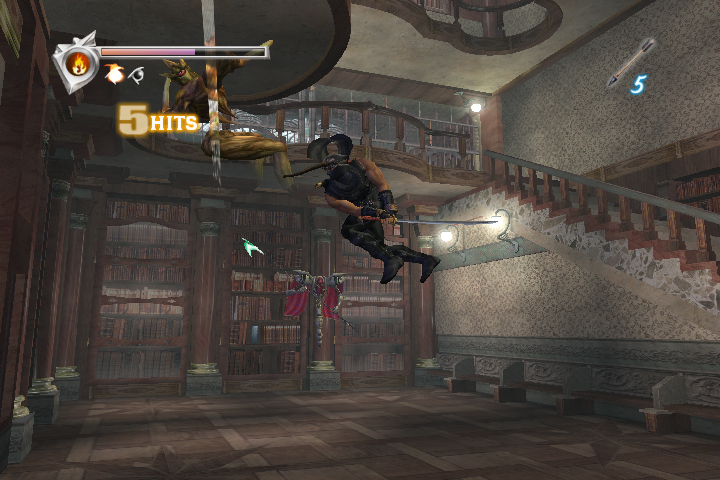
《Ninja Gaiden》(Tecmo,2004)
"Comparative Marketing"
Itagaki’s sharp personal vision let him recognize the Xbox’s raw capability and translate his ideal ninja combat into motion. His unfiltered, unapologetic personality — free of the usual moral restraints — was equally essential to his legend.
After his death, Tekken producer Katsuhiro Harada published a long piece revealing that their public rivalry had been, in part, a deliberate sales strategy of “comparative marketing.” Itagaki studied the “enemy,” identified what Tekken lacked, and built Dead or Alive to fill those gaps.
That same stubborn independence is what gave Ryu Hayabusa his distinctive edge. It also explains why, after Itagaki left, Ninja Gaiden — whatever its sales numbers — always felt as if something essential was missing: the sharp, economical ferocity that made Hayabusa move like the classic Chinese maxim — swift as the wind, quiet as the forest, aggressive as fire, immovable as a mountain. Without that cutting style, what is the point of being a ninja?
The Magical 1990s
It is tempting to believe that game creators of the 1990s simply possessed more personality. Social media had not yet reached today’s saturation; there was no instant online pile-on, no DEI checklists, no invisible hand of moral orthodoxy yanking creators by the nose.
Figures like Itagaki may belong uniquely to that restless 1990s-to-millennium generation — a generation that kept inventing and refused to be led by the ghostly fingers of the internet.
In his final days Itagaki asked a friend to post a farewell message on his Facebook account:
My life was a continuous series of battles. I kept winning.
I caused a lot of trouble along the way.
I am proud that I fought through according to my own convictions.
I have no regrets.
I only feel deeply sorry that I could not deliver a new game to the fans. Forgive me.
That’s just how it is.
So it goes.
Tomonobu Itagaki, you need not regret. The games and characters you created will live forever in players’ hearts.
Text/Ringo