


Twenty years ago was the heyday of online games. Names like Ultima Online, EverQuest, Lineage, Ragnarok Online, Stone Age, and King of Kings — do you still remember them? I believe many of you not only remember them but also played them and got addicted.
What about RuneScape?
It’s normal if you have no impression of it, since no Chinese version was ever released. However, the game was extremely popular in Europe and America. In 2008 it even entered the Guinness World Records as the most-played massively multiplayer online role-playing game (MMORPG), a title it later lost to Minecraft.
RuneScape was not only popular in the West; it also had many players in Russia, South America, the Philippines, and elsewhere. From the game’s launch through its peak period, the South American country of Venezuela happened to be in an era of steadily rising incomes.
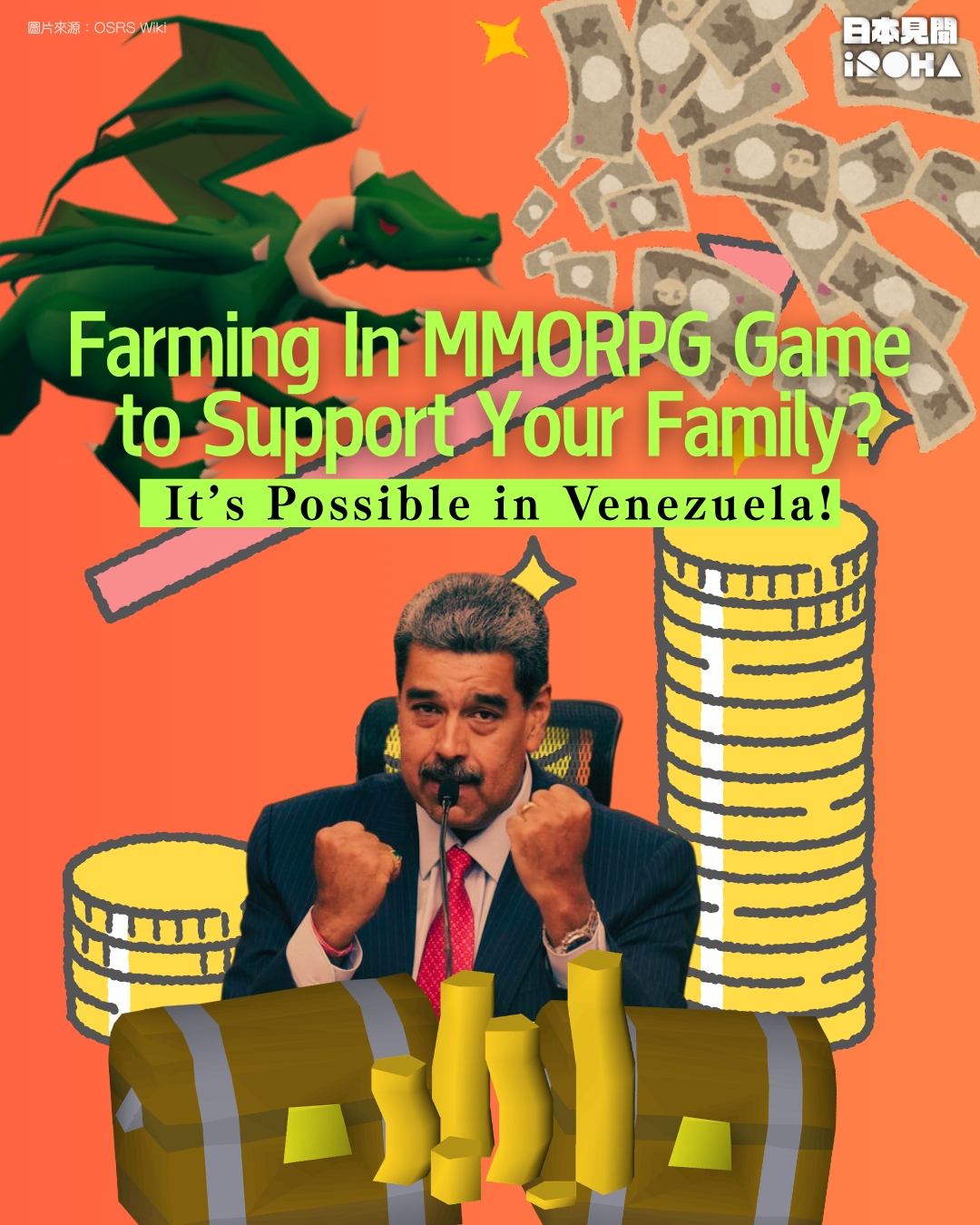
Venezuela Back In The Days
If you knew any friends who were passionate about socialism at the time, they probably told you: “Venezuela proves that socialism can succeed.” And back then, it really looked that way. Thanks to oil revenues, Venezuela offered free healthcare, the government controlled rents and housing prices, and prices of goods were tightly regulated.
Venezuelan’s incomes were also continuously rising. The average income of ordinary Venezuelans at the time was roughly equivalent to 400–500 US dollars — about the same as Taiwan’s “22K” monthly salary of that era — nearly double what it had been at the beginning of the century.
Naturally, it was a time when Venezuelans felt prosperous and confident.
With lower prices, better welfare, and steadily increasing salaries, Venezuelans followed Western gaming trends. Anyone who has played MMORPGs knows that these games naturally develop their own economic systems, and that people use real-world currency to buy in-game items or equipment. A “black-market economy” inevitably exists, complete with people selling gold, leveling-up, or trading rare items.
If you were a player from a low-income region, you could farm gold coins and sell them to players from high-income regions for a profit. After all, those players’ time was precious, so the arrangement was mutually beneficial. Free-to-play Venezuelan players naturally filled this role in front of Western players.
Ragnarok Of The Oil-Backed Socialism
Venezuela’s good fortune rose with oil prices and declined with them. After oil prices fell, the government could no longer support its vast civil service, NGOs, and welfare institutions, so it decided to devalue the currency. In 2012, Venezuelans could still receive monthly salaries worth several hundred US dollars; just three years later (2015), those salaries were worth only a few dozen dollars. And the worst part was that the value continued to plummet in the years that followed.
They had once been proud that their socialism allowed them to live with more dignity than citizens of developed countries. Within a few years, however, the entire nation struggled even to eat.
With survival difficult at home, many people wanted to take on overseas freelance work, but it was far from easy. Faced with arbitrary government policies and an unstable currency, foreigners were reluctant to give work to Venezuelans. After the economic collapse, people truly could not even afford canned food. Players of RuneScape therefore began selling their virtual treasures just to get by.
At that point, some discovered that the money they earned from farming in-game items was higher than what they could make from legitimate work in the country.
Low Barrier To Entry
Moreover, the game was old, free-to-play, and had a low barrier to entry. Its system requirements were also low — even old, broken, recycled computers could run it. A large number of desperate Venezuelans, half-believing and half-doubting, joined the ranks of “virtual item farmers.” After farming and selling to other players, they found they really could support themselves.
Word spread rapidly in Venezuela. More and more people joined “OSRS” (Old School RuneScape) and learned how to farm.
In those years, as incomes inside Venezuela kept falling — down to a monthly average of only about 10 US dollars — players discovered that simply grinding high-yield monsters such as Green Dragons for an hour could yield 500,000 gold coins. Selling a full day’s worth of coins on the virtual market was worth roughly 2 to 5 US dollars at the time. Remember: the average Venezuelan monthly income was only 10 dollars.
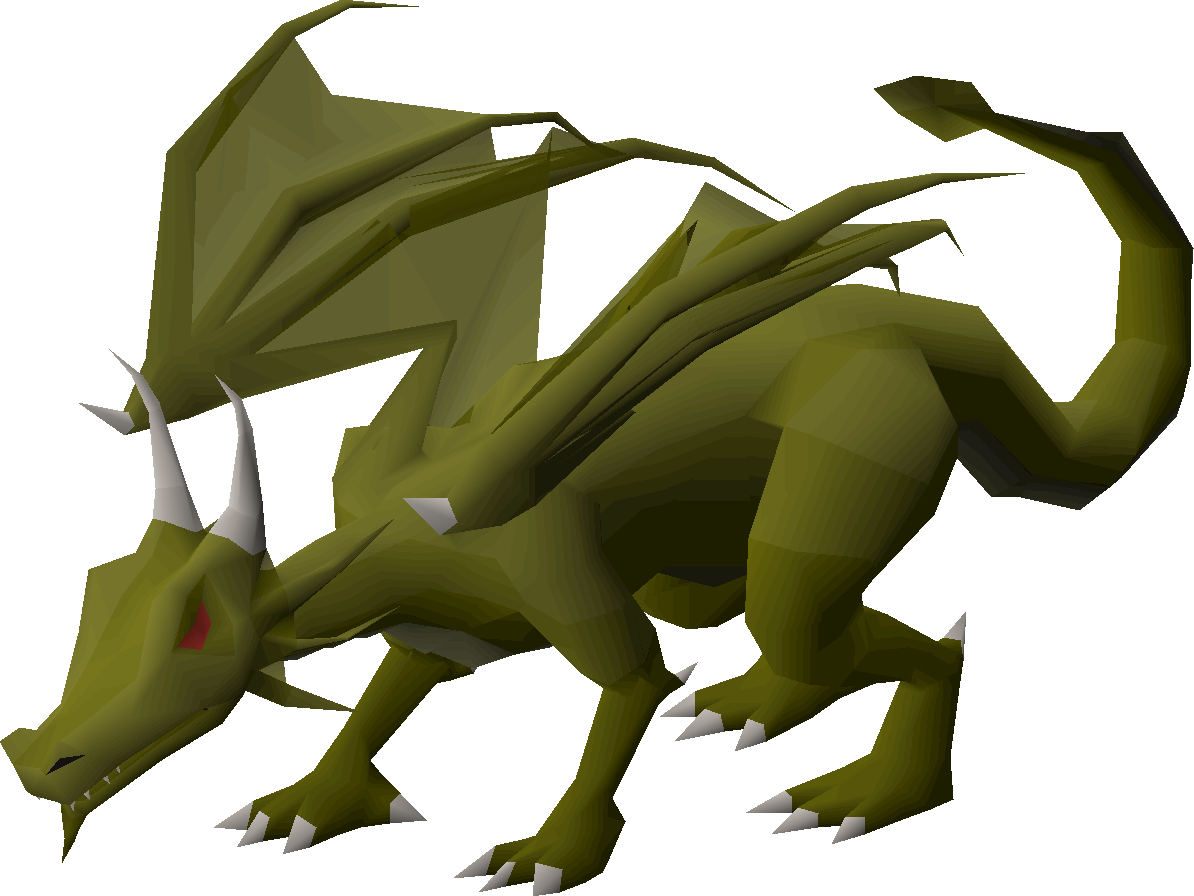
"Green Dragons"(pics from OSRS Wiki)
Video games could not only keep you alive — they could support an entire family! Eventually even local Venezuelan newspapers learned about it. The media reported extensively on this money-making method and published “gold-farming guides.” As a result, huge numbers of players flooded into OSRS. Tens of thousands of Venezuelan players were online at the same time, farming together in a spectacular scene.
Of course, the in-game market mechanism responded. With an oversupply of game resources, gold coins on the market plummeted in value. Yet the game currency is said to have “only” lost about half its value. Compared with the real-world currency that had become worth less than toilet paper, the game’s currency and economy seemed far more stable.
So when many people asked why Venezuelans were causing the currency to depreciate, the Venezuelans felt those critics simply had never seen the real world. This led many players to feel that the Venezuelans were ruining the gaming experience, and they began deliberately hunting these “farmers” as a form of countermeasure.
Yet Western players were ultimately just there to “play,” while the Venezuelans were there to “make a living.”
When pottery met porcelain, the pampered Western players were finally defeated by the Venezuelans’ sheer numbers. The story was even covered in depth by Bloomberg and became well-known throughout the Western gaming community. After all, the idea that playing video games had become a means of survival was something that could capture readers’ interest — and even their sympathy.
The Game Saves Lives
Searching “Venezuelan gold farm” on YouTube will still turn up large numbers of videos from that period discussing the phenomenon. Some people even uploaded footage of themselves “hunting farmers.” As the issue grew bigger, the official developers eventually decided to nerf that content and banned many IP addresses from Venezuela. The practice gradually declined.
Of course, Venezuelans did not stop at one game. They applied the same methods in World of Warcraft and other online games in order to earn money. However, those games varied in how open their economies were and how tightly the developers controlled them. RuneScape happened to be one of the more open types, and its particularly low entry barrier is what allowed people to make a living from it.
In any case, thousands of Venezuelans truly supported their families for a time through this method. They brought food and medicine to their relatives and even helped fund the migration of family members to nearby countries — possibly indirectly saving many lives. Venezuelans’ time playing RuneScape left an important mark in gaming history, and RuneScape itself became part of the collective memory of the Venezuelan people.
Text/Robert Girlyman