



The U.S. Department of Justice’s massive release of millions of pages of “Jeffrey Epstein-related documents” has confirmed for the public some of the secretive inner workings of wealthy and powerful circles, while exposing a variety of horrifying and sordid activities. Over the years, there have been many stories that documented or reflected various “rumors” surrounding such worlds, and the 1990s saw several mainstream works dealing with similar themes. In film, there were Eyes Wide Shut (1999) and 8mm (1999); in manga, there was Yu Yu Hakusho (serialized from 1990 to 1994).
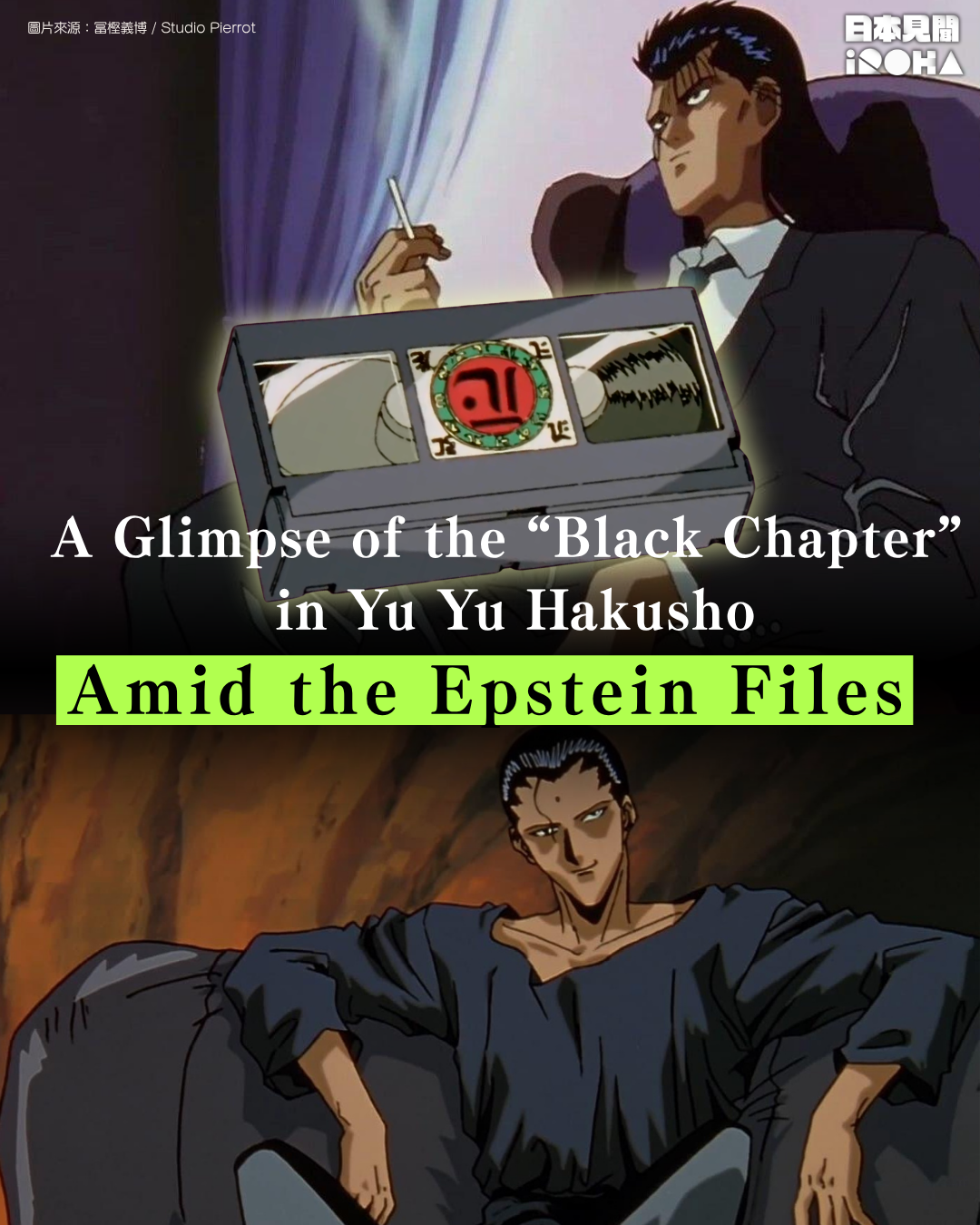
Although Yu Yu Hakusho is primarily a story about friendship, youth, and hot-blooded martial-arts battles, much like Yoshihiro Togashi’s later works, it incorporates some remarkably adult elements beneath the framework of a shōnen manga( "boys' comics"). These include depictions of an underground circle of wealthy elites, which happens to become an important theme in the latter part of Yu Yu Hakusho.
Togashi was born in 1966 and was only in his twenties when he created Yu Yu Hakusho, yet he seemed to have already studied the darker side of society quite extensively. In the “Yukina” and “Dark Tournament” arcs, the author introduced Sakyo, the mastermind behind the operation, as well as the jewel merchant Gonzo Tarukane’s “Black Black Club” (BBC).
This is a criminal organization of wealthy people that is also involved in human trafficking. It imprisons numerous demons and psychics, allowing wealthy clients to exploit and consume them in unspeakable ways. The “Dark Tournament,” which leaves one of the deepest impressions on us and in many ways represents the series itself, seems to be little more than a live-action spectacle created by these wealthy humans for gambling and to satisfy their perverse appetite for entertainment. No matter how seriously the fighters battle for their lives onstage, it is ultimately just a livestreamed amusement show for rich people.
Togashi, who has long been fascinated by mysterious subjects, probably drew considerable inspiration from enduring Western conspiracy theories. His BBC, much like the rumored “transnational organization of global elites” in Western conspiracy lore, is also deeply interested in the occult and paranormal.
The world of Yu Yu Hakusho is divided into three realms: the Human World, where ordinary people live; the Spirit World, where humans go after death; and the Demon World, inhabited by demons. There are, however, small passages through which one can travel between these realms. This gives rise to the smuggling of low-level demons into the Human World, an operation organized and facilitated by the BBC.
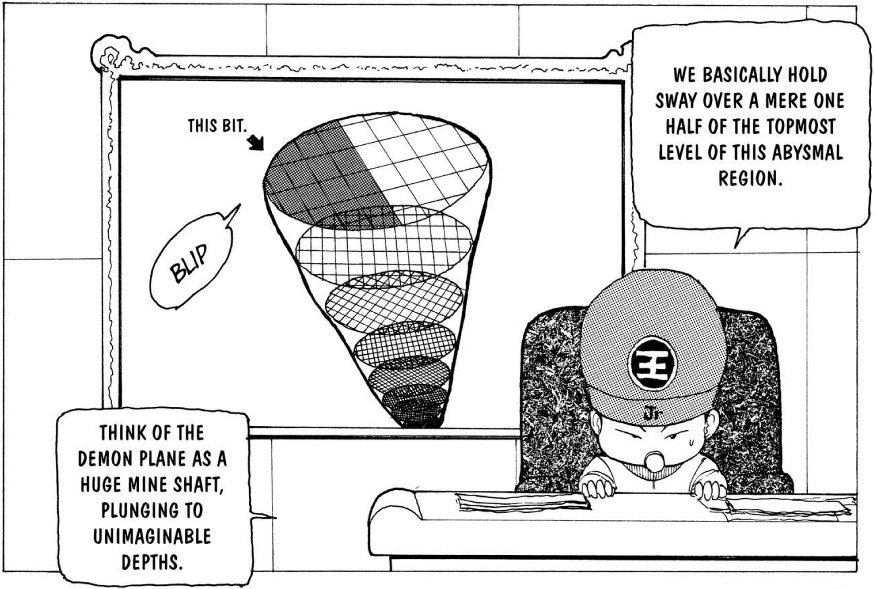
(Demon World)
It begins with a group of magicians who open a passage in order to summon low-level demons. Human financiers then subject these lesser demons to horrific and unspeakable acts, use them in Frankenstein-like experiments, or exploit and mistreat them in various ways. There are many utterly vicious demons in the story, but the evil committed by humans appears more organized—and more capable of deception. Once the organization is exposed, the scale of its connections becomes even more shocking. Everything feels like a mirror image of reality.
This organization also “creates” one of the major antagonists of the latter part of the series: former Spirit Detective Shinobu Sensui. According to the original story, Sensui is a fundamentally “righteous” person. From childhood, he believed that humans were the good side and demons the evil side, embracing a black-and-white moral worldview. After becoming a Spirit Detective, he has been upholding this belief and protecting humanity.
The Spirit World could not tolerate the depraved behavior of these wealthy men. During one of his assignments, Sensui breaks into a BBC party where demons are being abused. What he discovers about humanity deeply shocks him: humans, it turns out, are capable of being worse than beasts.
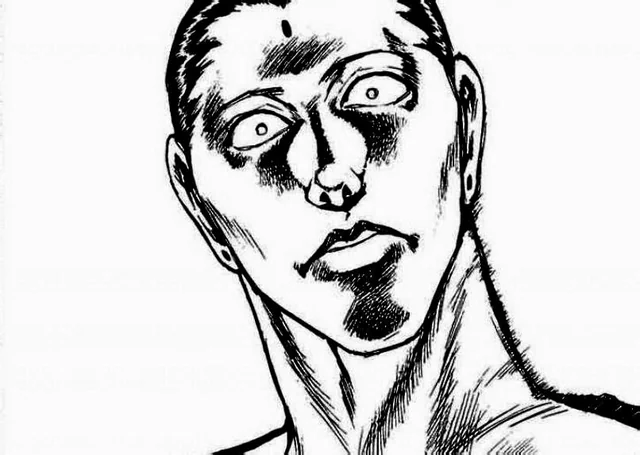
(Shinobu Sensui in the comic)
Later, Sensui infiltrates the Spirit World’s archives and steals a classified videotape known as the “Black Chapter,” which records humanity’s cruel and evil deeds. After watching it, his worldview collapses. Torn apart by the contradiction, he develops multiple personalities and comes to believe that the passage to the Demon World should be opened so humanity can be punished.
Sensui becomes one of the most formidable opponents faced by the protagonists in the latter part of the story. In a sense, the darkness cast over society by the BBC never really disappears—it simply generates the next problem.The section involving Sakyo and Sensui is one of the strangest yet most realistic chapters of Yu Yu Hakusho, and it is driven by the villains. The antagonists are so vividly portrayed that they almost steal the spotlight from the protagonists.
Sakyo describes his family as normal, with normal parents, yet he was an eccentric from childhood and deeply twisted inside. He could only feel excitement through extreme acts of violence. Eventually, he became obsessed with crime and gambling. Even gambling with money eventually ceased to be stimulating enough, so from time to time he had to gamble with his own life.
He already possessed more money and power than he could possibly spend in a lifetime. Everything ordinary people desire, he had acquired long ago. This was an enormous achievement—but also the gateway to depravity. Because people always need something to pursue; they need something to look forward to. And so some people continue moving into forbidden worlds, searching for sensations they have never experienced before. Sakyo represents a certain kind of person—usually someone who lacks nothing materially.
Togashi’s skill at writing villains was remarkably mature for his age. Some of the details he casually threw into the story in his twenties reveal, when examined more closely, deeper meanings that “adults” may understand better.
Ah. So this really is what reality is like.
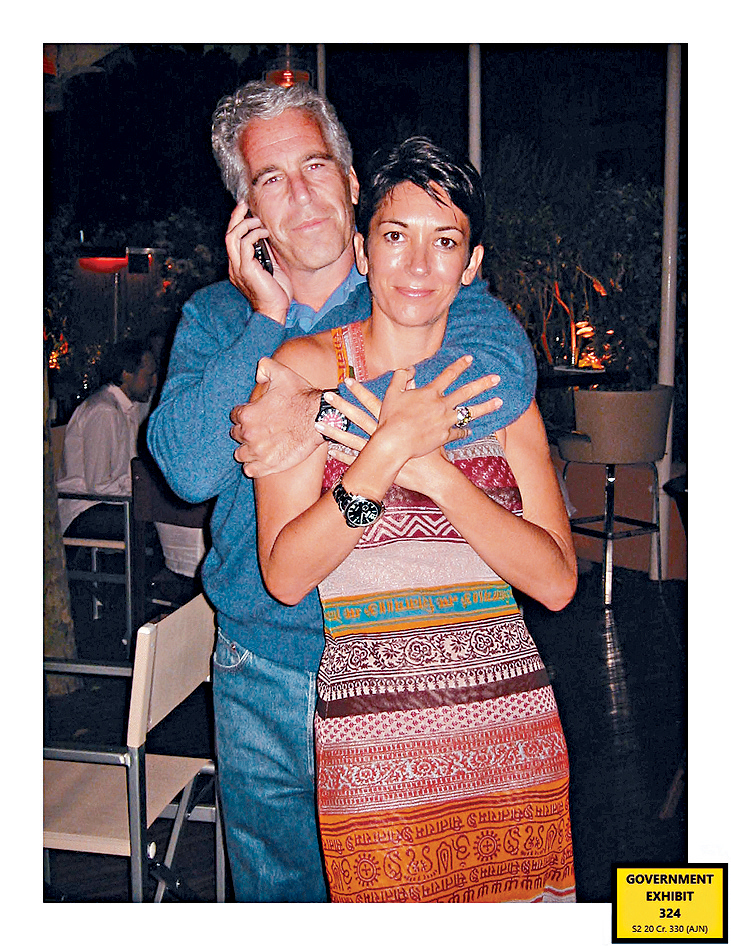
Ordinary people need to be wary of the powerful and the wealthy, because they may be a group of people who are inwardly frustrated and bored. And boredom can easily breed depravity.
When an idle class has that much free time, how exactly do they spend it?If you keep asking that question, you may eventually uncover something dark—and bloody.
In Hunter × Hunter (1998–present), we can likewise see that Togashi is highly adept at portraying people who pursue extreme sensations of one kind or another. He is also skilled at writing villains who seek revenge against the world.
Take the environmentalist nation NGL (Neo Green Life) in Hunter × Hunter. Beneath its environmentalist façade, it is actually an organization producing illegal drugs. Togashi also tells the backstory of NGL’s founder, Gyro, including his complicated relationship with his father. At its core, NGL is Gyro’s grand entrepreneurial project for taking revenge on humanity.On the surface, it promotes environmentalism; behind the scenes, it manufactures drugs. It also conceals a deeper layer of malice: the deliberate corruption and grotesque parody of an ostensibly beautiful ideal.
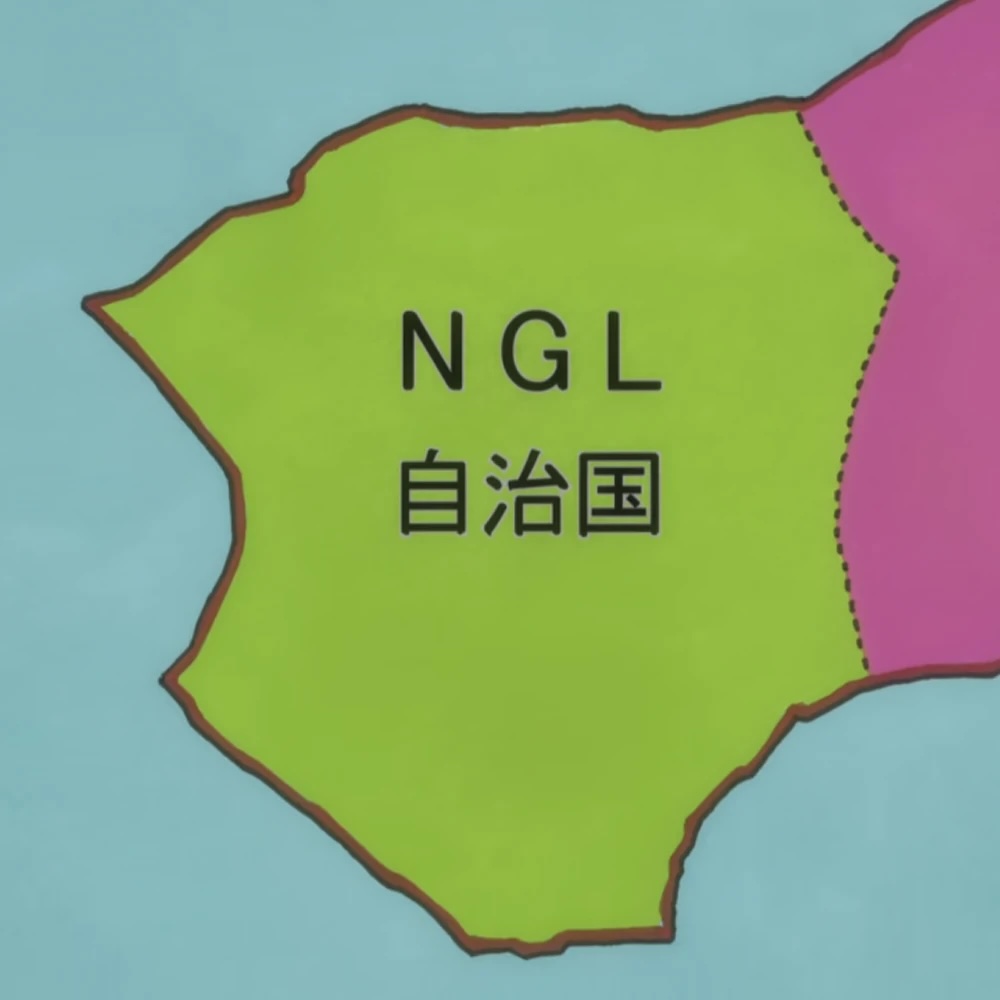
(Neo Green Life Autonomous State)
Togashi really did seem to understand, from an early age, how to portray the great villains that emerge from the various personalities within society. In reality, some villains, like Sakyo, may come from backgrounds that appear utterly ordinary—or even from what society would conventionally consider a “happy family.”
Text/Fishman